What new reading research reveals about conversation, attachment, and the environments where literacy actually grows.
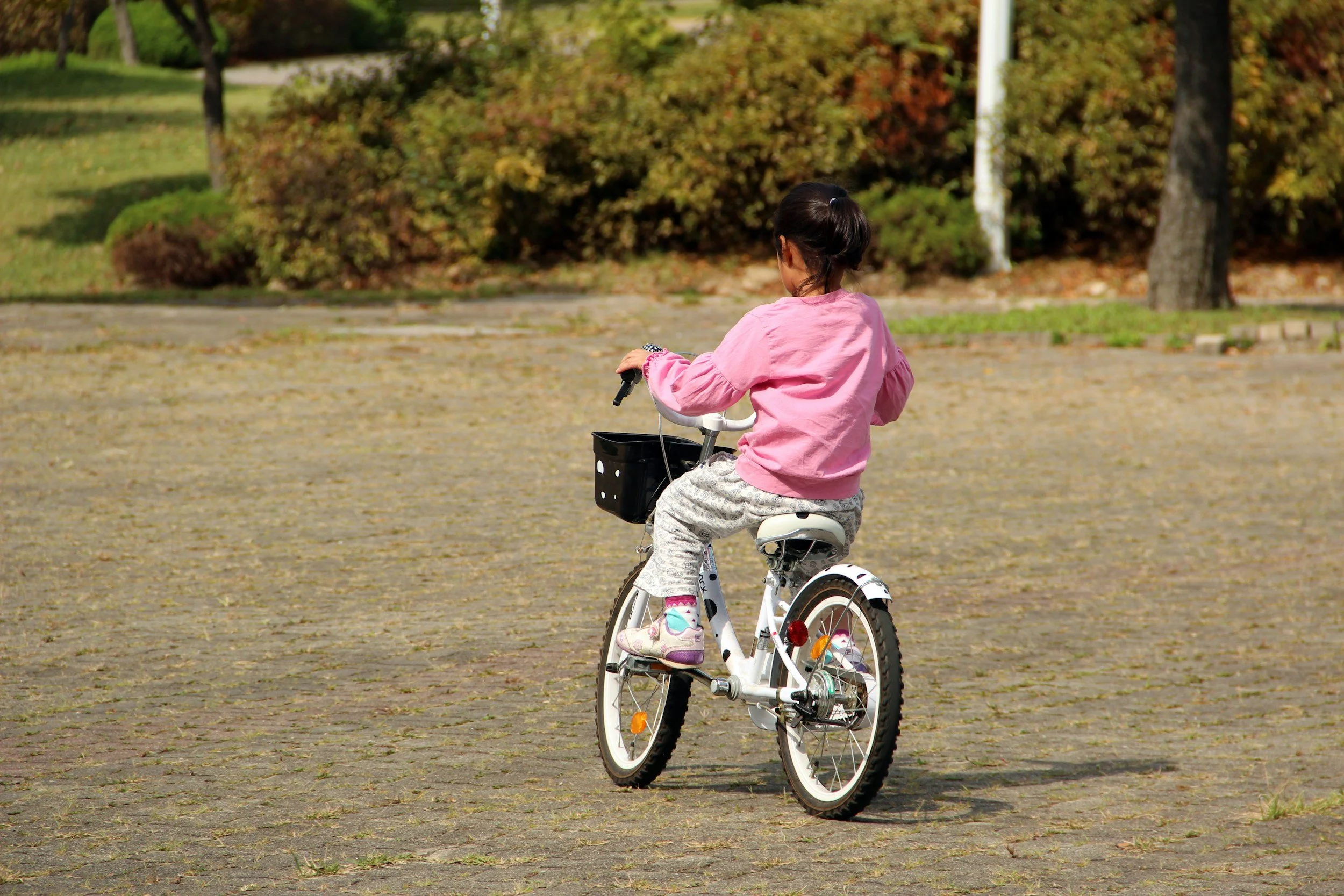
Sometimes the journey toward literacy begins with a bicycle basket full of library books.
The Treasures in My Bicycle Basket
I still remember riding my bike to the library as a little girl.
I would choose my six-book limit carefully, balancing the weight of possibility in my hands before placing the books into the basket on my bike. Then I’d ride home with my treasures and spend the day inside those stories. Sometimes, I’d finish all six books in a single afternoon and ride back to the library before closing to get six more.
I didn’t know it then, but I was learning something far deeper than how to decode words on a page.
I was learning that reading could enlarge my world.
Books made me feel less alone. They introduced me to people I never would have met otherwise. Charlotte Mason became one of my dearest friends through her writing. William Wilberforce became a hero because gifted authors helped me feel the weight and beauty of his devotion to ending the slave trade. Writers like John Lynch, Jaime Winship, Curt Thompson, and James Wilder have all shaped my story through the pages of their books.
We often speak of reading as a skill. But reading is also relationship.
It is participation in reality.
Reading Is More Than a Skill
Long before I began writing and speaking about restoring the lost art of being family, reading was my undergraduate specialization. I have spent years helping children—and adults—learn to read, and over time I began to notice something important: children rarely learn best through pressure, fear, or performance. They learn best in environments of connection, delight, safety, and shared attention.
Side-by-side has always been my favorite way to read with children.
Not across a desk. Not through pressure. Beside them.
I remember reading aloud to children after lunch and feeling the room soften. It was as though everyone collectively surrendered to a quiet sigh of delight. For a few moments, nobody was trying to measure up. Nobody was anxiously performing. We were simply receiving a story together.
And increasingly, I wonder if we’ve forgotten how much environments matter when it comes to learning.
When Shame Enters the Story
Recently, researchers led by Dr. Daniel Hajovsky at Texas A&M conducted one of the largest analyses ever performed on the relationship between cognitive abilities and reading development. For decades, many assumed reading success was mostly about intelligence or visual processing. But this research pointed somewhere else entirely.
The strongest predictors of reading were not primarily IQ or visual skills. They were auditory processing—the ability to hear and distinguish sounds within words—and what researchers called “Comprehension-Knowledge,” the reservoir of words, experiences, stories, ideas, and background understanding children gather from the world around them.
In other words, reading develops inside a much larger ecosystem than we often realize.
Children do not merely learn to sound out words. They learn language through conversation. Through stories. Through songs. Through being read to. Through asking questions. Through noticing the world around them. Through secure relationships that allow curiosity to stay alive.
This matters because many children today are being introduced to reading inside environments shaped more by performance than delight.
Parents feel pressure to have children be “ahead.” Preschoolers are given worksheets and early benchmarks. Reading becomes something to conquer instead of something to savor. And as soon as a child catches even the faintest whisper of the idea, “Everyone else can do this except me,” their energy becomes divided.
Part of the child is trying to learn.
The other part is battling shame.
That division matters more than we often realize.
The Young Man Who Thought Receiving Help Was Cheating
One of the most heartbreaking moments in my years of teaching came while working with a mature teenage boy who struggled significantly with symptoms of dyslexia. We spent much of our time reading high school literature side by side. I would read a sentence—or sometimes a paragraph or a page—and then he would read the same section after me.
One day, he quietly confessed something that still stays with me. He told me he felt like he was cheating because I was helping him with the words. My heart broke. Not because he needed help, but because somewhere along the way, he had absorbed the idea that needing help was failure. That receiving support was somehow less honorable than struggling alone.
But helping children learn is not cheating.
Helping human beings grow is not cheating.
Needing support is not weakness. It is part of being human.
And slowly, something began to change for him. Without shame consuming all his internal energy, his nervous system began to settle. Reading stopped being only a battlefield. His brain was receiving the tending it needed.
Then one day his mother sent me a text message in tears. “He’s laying on the couch reading The Hobbit.” Not because someone forced him to. Because delight had returned.
I think about that moment often. His reading struggles were not a sign that he lacked intelligence or value. He simply needed support inside the developmental ecosystem God designed for growth. His brain was not broken. It was unfinished, adaptable, and waiting for patient companionship.
That realization stretches far beyond literacy.
The Ecosystem Where Reading Flourishes
When we talk about restoring the lost art of being family, we are not simply talking about improving behavior or creating nicer homes. We are talking about recovering the kinds of relational environments where human beings can flourish.
Atmosphere matters.
Conversation matters.
Shared delight matters.
Safety matters.
Stories matter.
Children learn inside relationships long before they perform independently.
Charlotte Mason famously wrote that education is “an atmosphere, a discipline, and a life.” I believe modern neuroscience and reading research are quietly rediscovering the wisdom embedded in that insight. Human development cannot be separated from the environments in which it unfolds.
A worksheet may measure isolated performance for a moment. But it cannot replace the power of a child curled beside a parent listening to a beloved story. It cannot replicate the nourishment of meaningful conversation around a dinner table. It cannot substitute for the neurological safety that allows curiosity, attention, and delight to flourish together.
Participation in Reality
The goal is not merely to raise children who can pass reading benchmarks. The goal is to raise children who can receive the world as meaningful, beautiful, coherent, and alive.
Children who see books not as enemies, but as companions.
Children who discover that reading is not merely academic performance, but participation in reality itself.
Perhaps one of the surprising benefits of restoring the lost art of being family is this: when children are nurtured in environments of connection, delight, conversation, and belonging, they often become stronger readers, too. Not because we forced the outcome. But because flourishing tends to grow where life is lovingly tended.
Together, there is great hope.
This is the first article in a new 4-part series, titled “Reading, Relationship, and the Lost Art of Being Family.” You may also enjoy the next piece in this series, Children Don’t Just Learn to Read. They Learn to Love Meaning. (coming May 2026)
At John 15 Academy, we’re exploring what becomes possible when families move beyond pressure and performance and begin restoring the environments where human beings flourish.
You can explore more articles, resources, and conversations at John 15 Academy.
